I spent twelve years behind the service counter of a bustling family bike shop, turning wrenches and guiding exhausted parents through the nuances of bicycle safety. I’ve seen it all: parents trying to mount heavy plastic seats onto flimsy, aluminum-tubed racks that weren't rated for a sandwich, let alone a toddler; I’ve seen the sheer panic in a parent’s eyes when they realize their kid’s helmet strap looks like it’s attached to their chest instead of their chin. And, of course, I’ve heard the screams. That distinct, high-pitched wail of a child who—for reasons known only to them—absolutely refuses to be part of your two-wheeled adventure.
After transitioning into parenting journalism, I’ve realized that the "child hates bike seat" struggle is almost always a mix of physical discomfort, developmental readiness, or—dare I say it—an installation oversight. Before we dive into the psychology of a screaming toddler, let’s get the basics right. Can your baby hold their head up for the whole ride? If the answer is anything less than a resounding "yes," we need to hit the brakes. Your child’s neck strength is the foundation of every safe ride.
The Readiness Reality Check: Is Your Child Actually Ready?
In my decade-plus of fitting, the most common reason for a distressed child is simply that they were put in a seat before their body was ready for the vibration, the wind, and the awkward posture of being a passenger.
Most manufacturers state that a child must be able to sit unassisted for at least 30 minutes before entering a bike seat. If they are slumping, leaning, or losing their balance when the bike hits a slight bump, they aren't having fun; they’re struggling to stay upright.
- Neck Control: If they cannot support their head for the duration of a ride, they are at significant risk of injury. A helmet on a tiny head adds weight that puts a strain on an underdeveloped neck. Sitting Unassisted: This is non-negotiable. If they can’t sit on the floor without support, they cannot handle the forces of a moving bike. Weight Distribution: Always consult the owner's manual for your specific seat. Exceeding the weight capacity isn't just a "recommendation"—it is a mechanical limit of the mount and the rack.
The "Installation" Annoyance: Don't Skip the Manual
Listen, I know you’re tired. I know you’ve been up since 5:00 AM. But when a parent tells me, "it looked easy, so I didn't bother with the manual," I shudder. A loose seat or a rack that isn't torqued to spec creates a "rattle" or "vibration" that the child feels instantly. To them, the seat feels unstable. If the seat is wobbling, your kid feels like they’re falling.
Check Your Torque
When I install a rack or a frame-mount seat, I use a torque wrench. Why? Because manufacturers provide installation torque guidance for a reason. If you over-tighten a bolt, you can strip the threads or crush the frame. If you under-tighten, that seat is going to sway every time you hit a pothole. Grab your manual, find the Nm (Newton-meters) requirement, and check those bolts before every single season. I usually count out loud while I’m tightening: *click, click, click*—that’s the sound of a secure connection.
Questionable Racks
If you are using a rack-mounted seat, please, for the love of all things holy, ensure your rack is rated for the weight of your child. I’ve seen too many "commuter" racks fail under the stress of a child seat. If the rack is thin, cheap, or lacks a secondary safety strap, it is not safe for a human passenger.
Troubleshooting: Why Does My Child Hate the Bike Seat?
If the mechanics are perfect and they’re physically ready, why are they still screaming? Usually, it comes down to comfort adjustments. Here is my go-to list for diagnosing the "I hate this" syndrome.
Symptom Likely Cause The Fix Head bobbing/hitting seat Helmet interference Check the helmet shape—ensure it doesn't have a large rear brim hitting the headrest. Fidgeting/slumping Lack of support Ensure the harness is snug and the footrests are at the correct height. Crying at stoplights Lack of visual stimulation Add a toy or talk to them constantly; they feel disconnected from you. Sudden onset crying Sun/Wind/Bugs Use a windshield accessory or check if the sun is in their eyes.Short Practice Rides Are Your Best Friend
Never start with a 30-minute trip to the grocery store. Start by riding around your driveway or a quiet cul-de-sac for five minutes. If they scream, you’re home. Reward them when you get back. Make the bike seat the "fun place" where they get a specific snack or a favorite song. Associate the seat with positivity, not just "transit time."
Helmet Fit: The Number One Offense
I cannot stress this enough: a loose helmet strap is a useless helmet. I spend half my life at the park adjusting straps for strangers because it makes my skin crawl to see a helmet pushed back on a child’s forehead like a hat.
The Two-Finger Rule: Place two fingers above the eyebrows. The front of the helmet should sit right there. If it’s higher, it’s not protecting the forehead. The "V" Shape: The straps should form a perfect "V" under the ears. If the slider is dangling halfway down their cheek, the helmet will slide off in a crash. The Chin Tightness: You should only be able to fit one finger between the strap and their chin. Any looser, and the helmet is just a decorative accessory.Age-by-Age: Finding the Right Gear
As a parent who started with a trailer and moved to a rear seat, I’ve learned that different ages have different requirements. My "Pre-Ride Checklist" (which I keep on my phone) changes depending on which child is in the saddle.
0–12 Months: The Trailer Era
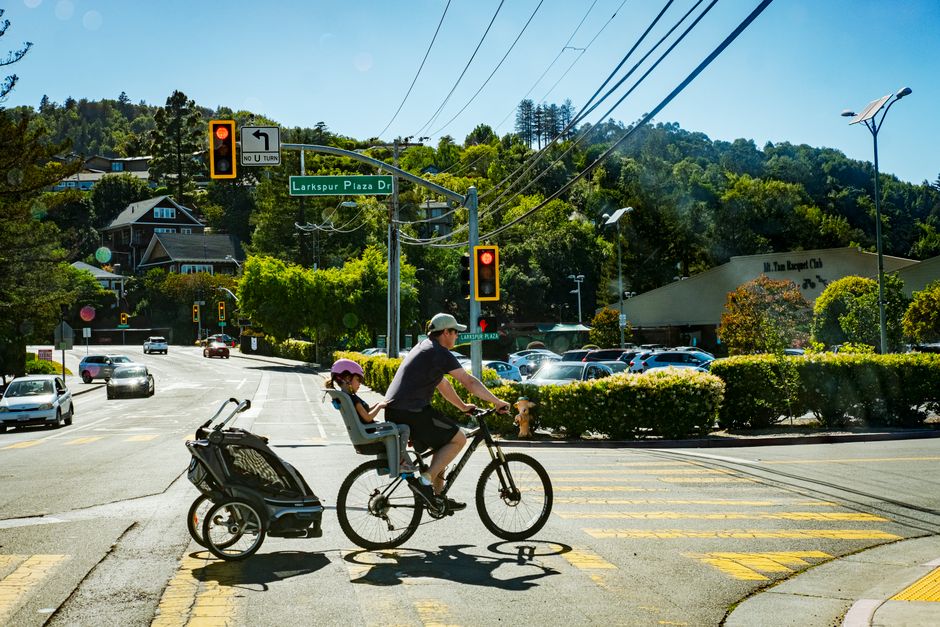
Honestly? My babies stayed in the trailer until they were well over a year old. Trailers allow them to sleep comfortably, they are protected from the wind, and they have the lower center of gravity that makes me feel much more stable as a rider. I always use a head-support insert for infants.
1–3 Years: The Rear-Mount or Cargo Transition
Once they hit the toddler phase, they want to see the world. This is when the "child hates bike seat" complaints usually peak because they feel restricted. I found that moving to a cargo bike—where the child is positioned between my arms or slightly behind me but still within talking distance—dramatically reduced the screaming.
3+ Years: Independence
By this age, they should be helping you with the pre-ride check. I have my kids help me count the clicks on their harness. It gives them agency and makes them feel like a pilot, not just cargo.
The Fitter’s Pre-Ride Checklist (Keep This on Your Phone!)
I never leave the garage without running this list. If you are struggling with a difficult passenger, running through this list out loud can actually help calm them down—it becomes a ritual.
- [ ] Head control confirmed? (Are they alert and strong?) [ ] Helmet straps checked? (Count the clicks, check the "V", two fingers above the brow.) [ ] Harness tension? (Snug enough to hold them, but not choking.) [ ] Mounts tight? (Check the bolts, check the rack, verify no wobbling.) [ ] Foot straps secured? (Loose feet are a recipe for a toddler trying to reach into the spokes.) [ ] Weight limits? (Have they outgrown the seat? Check the label.)
Final Thoughts: Patience is Part of the Kit
If your child is screaming, they are communicating a need. Sometimes that need is just, "I want child bike seat rack compatibility to get off." And that’s okay. When I first started riding with my oldest, we had to abandon ship halfway through a ride more than once. It’s frustrating, but it’s better than turning your child off to cycling forever.

Keep your short practice rides consistent, keep your gear maintained, and for heaven's sake, keep those helmet straps tight. You’re building a lifelong cyclist. It’s a marathon, not a sprint—unless, of course, you’re trying to outrun a tantrum, in which case, I promise you: the bike is faster than the stroller. You've got this.